

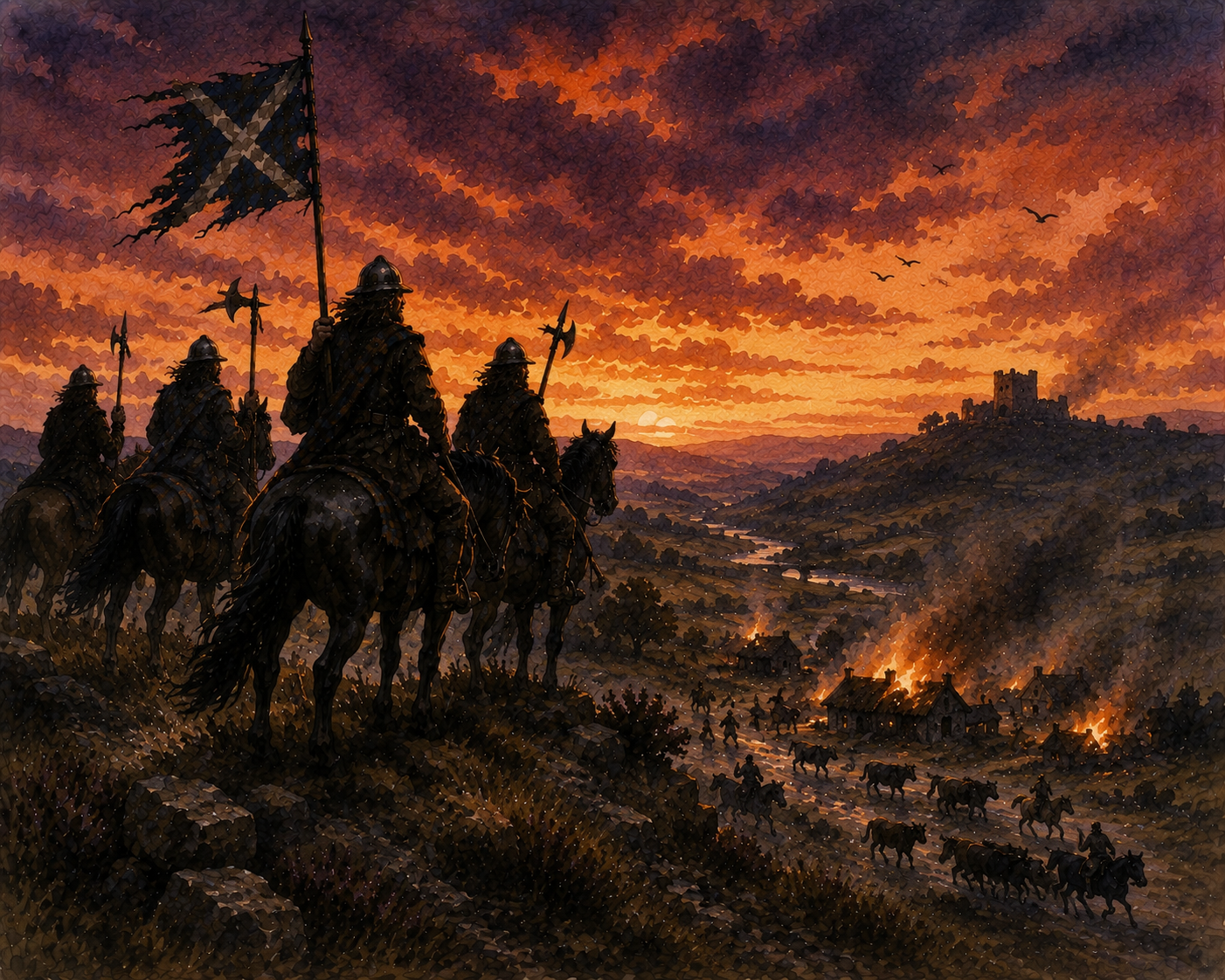
The Border Reivers
In the late 1200's there was constant warfare along the Scottish border that was triggered by a succession crisis. This crisis allowed Edward I of England to try a total conquest of Scotland. The border regions and in particular the town of Berwick changes hands a remarkable 13 times between 1296 and 1482.
The constant fighting ruined much of the arable land, which led to people to take up livestock farming instead as away to stave off famine and try to make a living. Huge areas of land on both sides of the border became lawless landscapes, and it was withing this landscape the the Reivers came into being.
The Origin Story
The act of reiving, to reive, or reave, is the act of plundering, robbing, or rustling cattle in particular. The reivers, did not swear fealty to any governing body. They were loyal only to their own clan, family, and kinship, and revenge feuds between families were often long, bloody and violent.
During these times of massive upheaval the reivers didn't exactly look after their own people. They would charge protection money from the farmers all along the border. The idea being that they would protect the farmers livestock from being rustled by neighbouring reivers. Although that didn't always happen.
The reivers built strong towers that could house their livestock (stolen or otherwise) in the lower section, while the upper levels were ideal for living in and being easy to defend. They are called Pele Towers, and few of them can still be found around the countryside of the border regions.
In 1603 King James VI of Scotland and I of England united the two countries and declared that he would put a stop to the reivers. Legally he did this by:
Renaming the region to make it a part of the untied countries,
Removed traditional border laws
Set up judicial commissions to hunt down law breakers and bring them to trial.
Also, the punishments were harsh - mass executions by hanging were initially swift, and whole families were transported to break up clans. Weapons and the Pele towers were seized and destroyed.
There were many famous or infamous reivers including Kinmont Willie Armstrong and many stories surround them and their exploits.
Key Locations

Located near Kelso, this iconic 15th-century rectangular tower stands 20 meters tall on a rocky crag. It features immensely thick walls and operates as a historic visitor site managed by Historic Environment Scotland.
Smailholm Tower

Located near Peebles on the River Tweed, this L-shaped tower house incorporates an older pele tower structure with rugged stone walls dating back to the 14th century.
Neidpath Castle

Standing near the Tweed, this 14th-to-15th-century structure still retains significant vertical walls and architectural fragments from its turbulent border history.
Whytbank Tower
Continue Your Journey Through Storied Landscapes
Explore another legend from North East England and the Scottish Borders.
Next story: The Island of Lindisfarne
Love the folklore of North East England and the Scottish Borders?
Join the Storied Landscapes Community to receive new legends, reimagined tales, and exclusive folklore maps and stories delivered straight to your inbox.