

Vindolanda
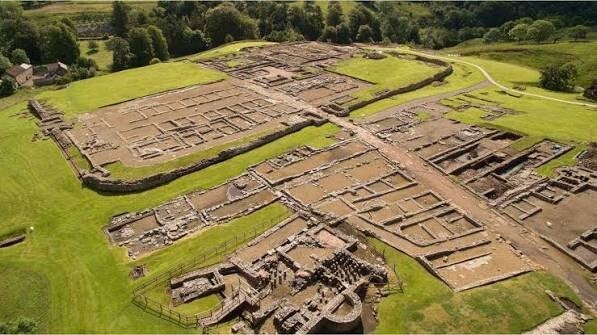
Vindolanda was a Roman auxiliary fort just south of Hadrian's Wall
Archaeological excavations of the site show it was under Roman occupation from roughly 85 AD to 370 AD
It lies upon the first Roman frontier in the north – The Stanegate Road and it is simply a stunning place to visit and historically amazing.
Although first built by the Roman army before Hadrian’s Wall Vindolanda became an important fort in its own right.
It was re-built no fewer than nine times. With each re-build leaving its own distinctive mark on the landscape and archaeology of the site. Which leads to a wealth of historical and significant finds.
On the site today is a modern world class museum using the latest interpretation techniques and displays to tell the story of the fort and those who lived worked and played there.
The Origin Story
As the excavation of the site is still ongoing the museum often updates their exhibitions with new and interesting finds.
In 2018 the museum was extended with a Wooden Underworld gallery, housing a rare collection of 2,000 year old wooden finds (including a toilet seat and a toy sword!).
Perhaps the greatest discovery here has been The Vindolanda Tablets. They are very thin wooden tablets with writing on them, they were found in the oxygen-free deposits on and around the floors of deeply buried early wooden structures and are the oldest surviving handwritten documents in Britain.
These fascinating tablets show a rare insight into the real lives of people living and working at Vindolanda near Hadrian's Wall nearly 2000 years ago.
The other physical remains include some of the following:
- A large Pre-Hadrianic bath house and a beautifully preserved 3rd century bath house.
- Several commanding officer’s residences and barrack buildings
- A headquarters building
- 3rd and 4th century evidence of village houses and workshops, latrines, and a Roman Celtic temple to an unknown God.
- The only temple to be found on display to a Roman god inside an auxiliary fort anywhere in the Roman Empire (Jupiter Dolichenus).
- A Post-Roman mausoleum and late Roman Christian church Replicas of a Roman temple and shop, a Romano-British house and replica sections of Hadrian's Wall in turf timber and stone.
Head to the Vindolanda Charitable Trust (www.vindolanda.com) for more information and to book tickets to this amazing piece of history.
Key Locations

Housesteads Roman Fort is an iconic auxiliary fort perched on a dramatic Whin Sill ridge about 1 mile north of Vindolanda, featuring well-preserved barrack blocks, a hospital, and sweeping landscape views
Housesteads Roman Fort

The galleries at the Roman Army Museum tell the story of the Roman soldier from a general empire-wide perspective through to daily life on the frontier. The galleries include objects from Vindolanda’s collection and full-scale replicas along with audio-visual and interactive displays.
The Roman Army Museum

At Corbridge Roman Town can walk along the main street of this Roman garrison town, flanked by the remains of granaries, a fountain house, markets, workshops and temples. Corbridge was initially the site of a series of important forts. But after Hadrian's Wall was fully commissioned it developed into a prosperous town, a tempting leave-centre for off-duty Wall garrisons.
Corbridge Roman Town
Continue Your Journey Through Storied Landscapes
Explore another legend from North East England and the Scottish Borders.
Next story: Long Meg & her Daughters
Love the folklore of North East England and the Scottish Borders?
Join the Storied Landscapes Community to receive new legends, reimagined tales, and exclusive folklore maps and stories delivered straight to your inbox.